If Move to Object is being retriggered very frequently and it has a big enough duration, it can stop working since the move animation is being interrupted over and over again. If you try 0s duration for the Move to Object behavior, then it will work since the animation is instant and therefore cannot be interrupted.
RobinsonX
@RobinsonX
Posts
-
Timer and wait before move to object stop working -
How to get tags of object from ray casting intersect -
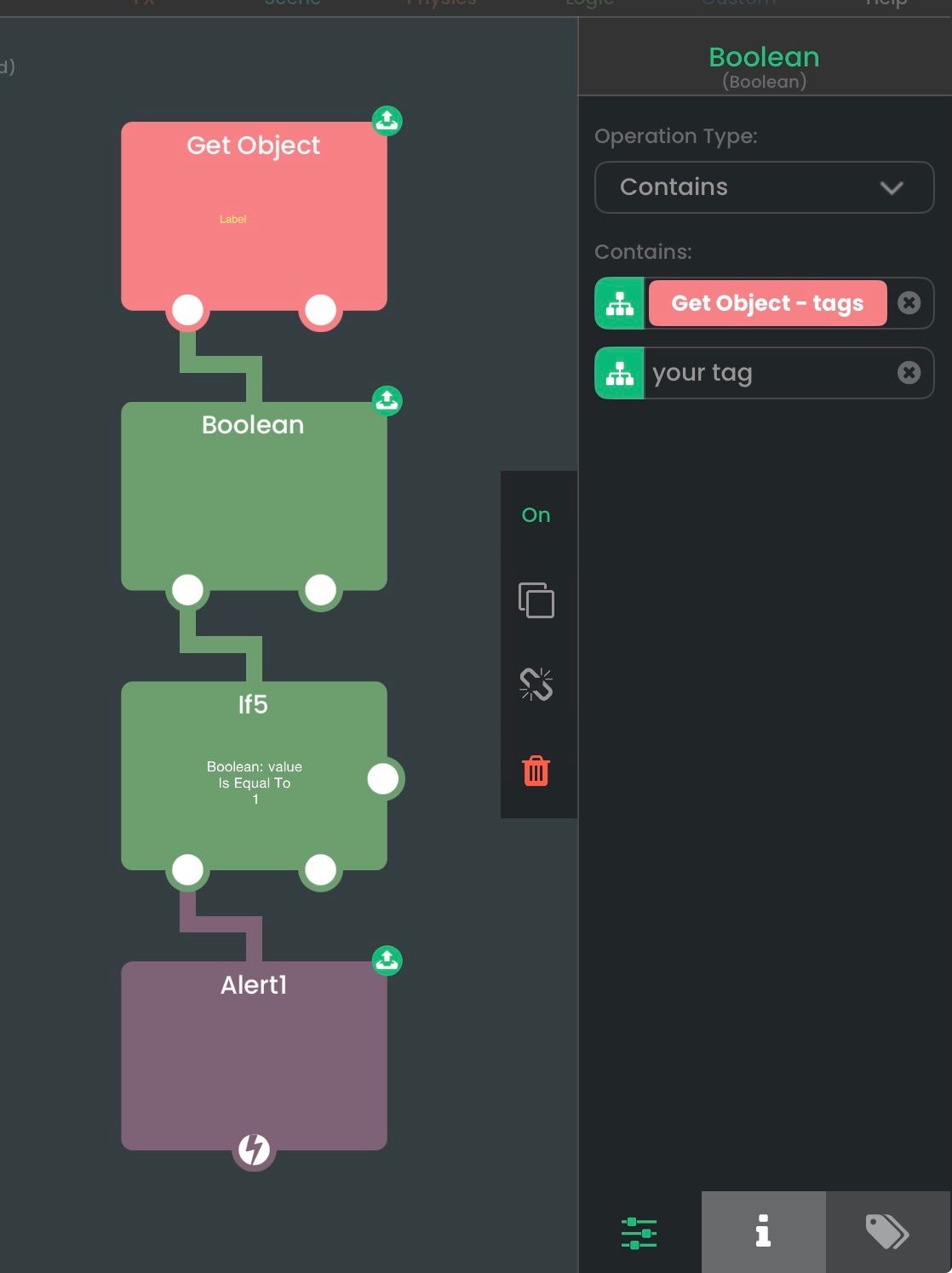
How to get tags of object from ray casting intersectHello! The Get Object behavior outputs
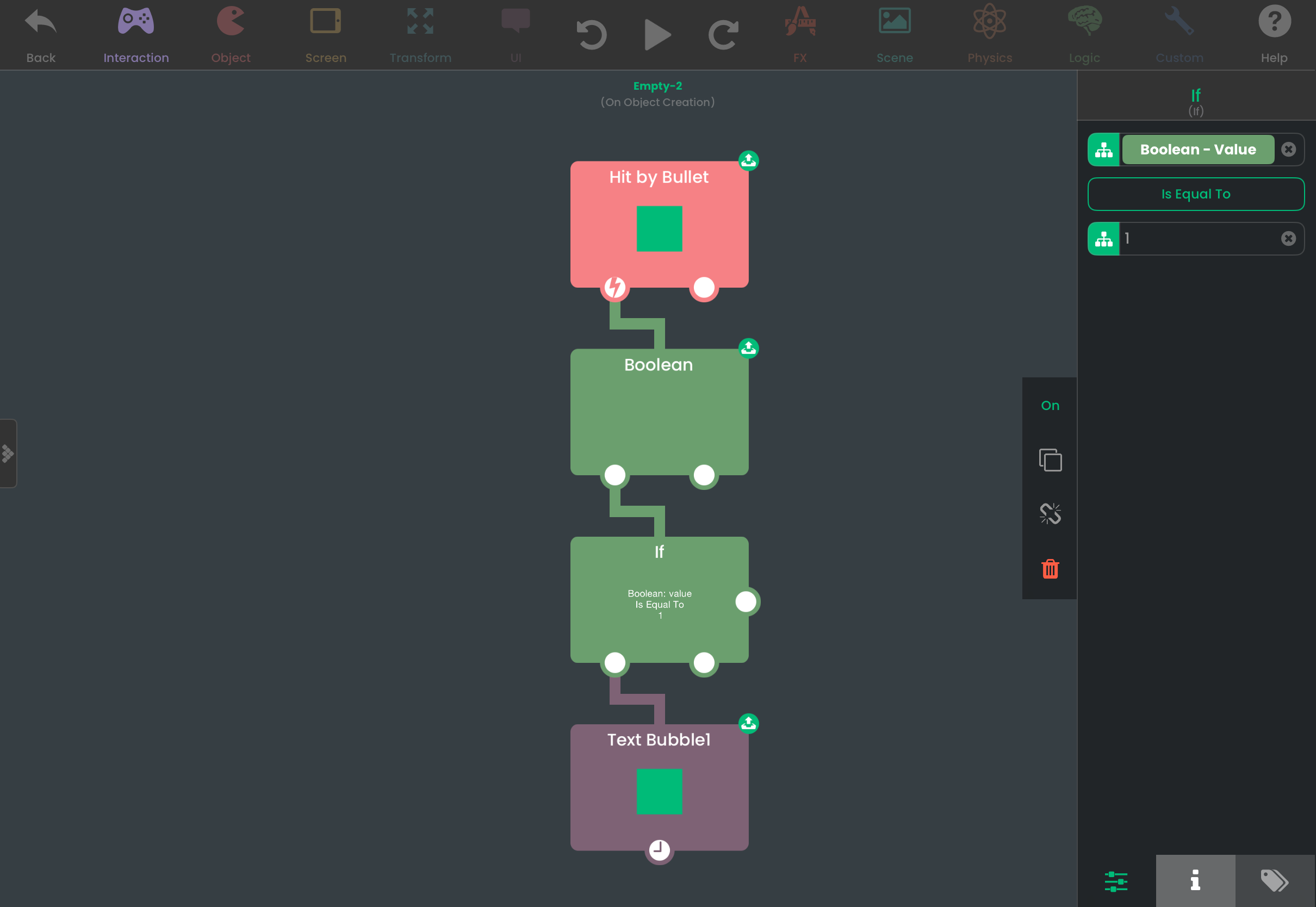
tagsof the current object. You can use Boolean to check iftagscontains whatever tag you're looking for - the behavior outputs1if it contains and0otherwise. You can use If to trigger logic when the result from the boolean behavior is1. -
Object behavior panel freezesTry double tapping on the screen to reset the camera position. This should allow you to drag the screen again.
-
How to properly display the text from an array in a label -
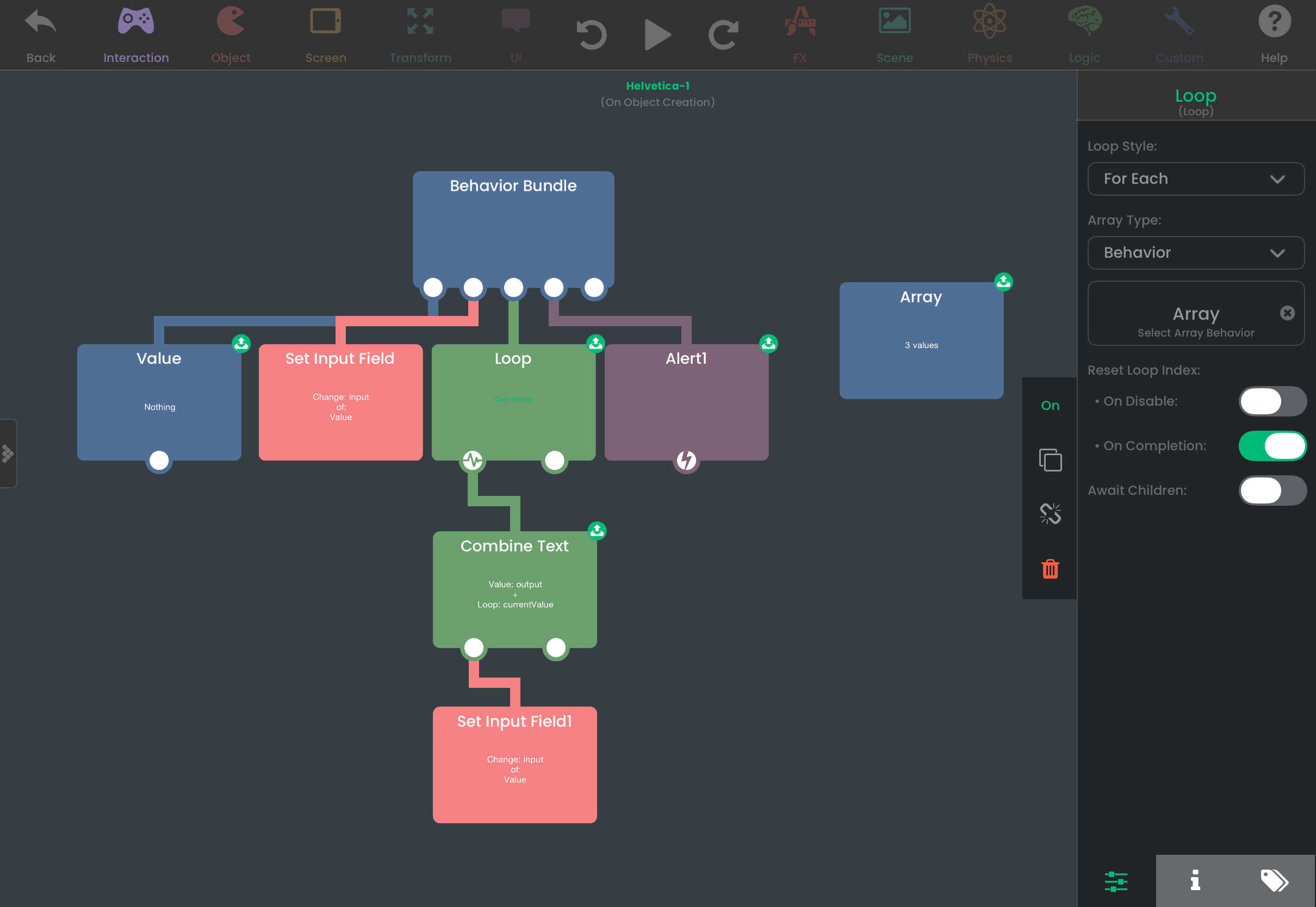
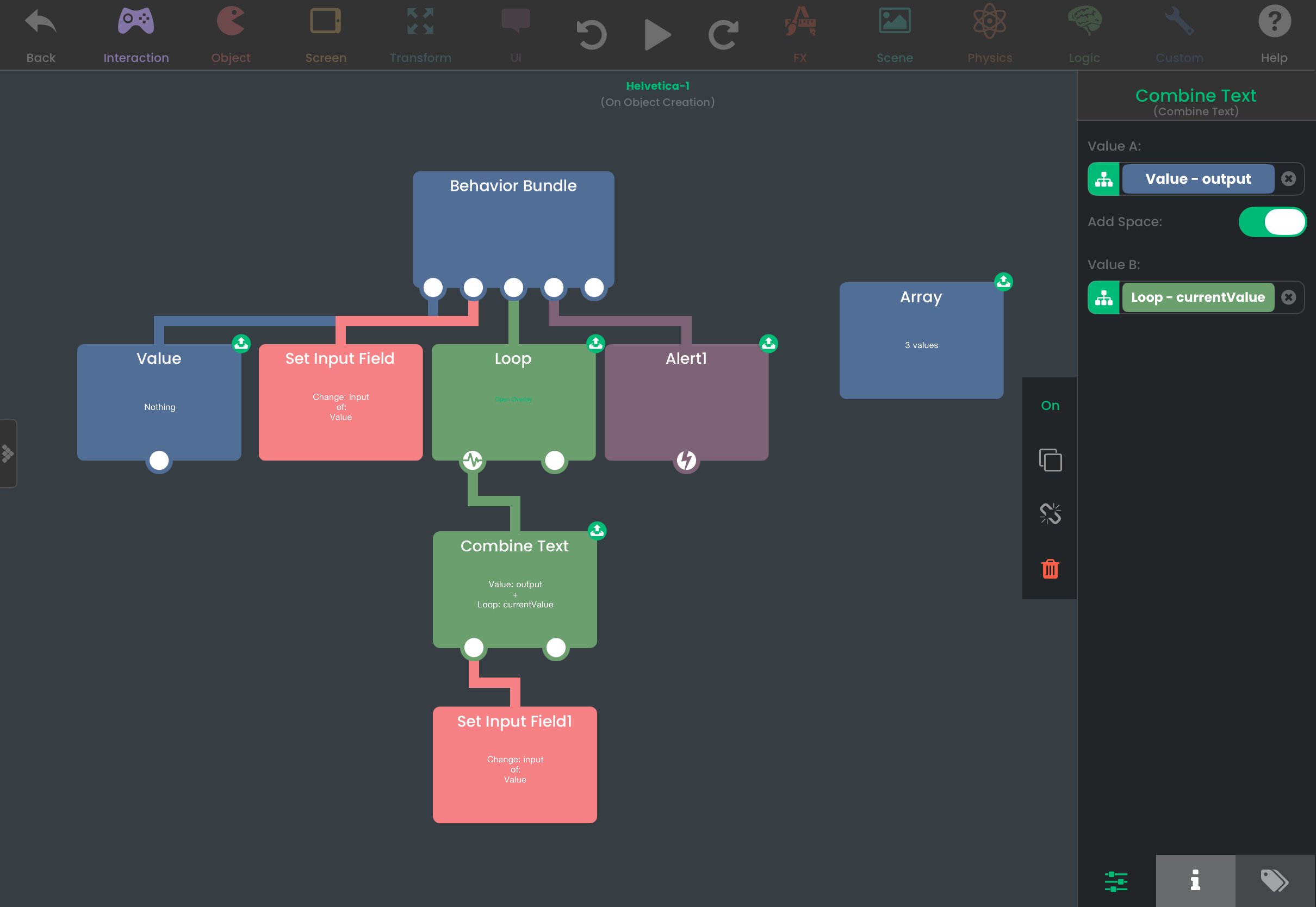
How to properly display the text from an array in a labelHowever, if your array is going to have variable amount of elements, then you will have to use a Loop to iterate through the array. First, you have a Value behavior and before looping, you make it empty so it starts with nothing in the value. Then in the loop, you would combine the value with the current element of the iteration. After the loop, the value behavior will have all the elements, separated by spaces.
-
How to properly display the text from an array in a labelYou can use a Text Operation behavior and use the
Text with Formatmode. In the input text, you can enter a format. Every instance of%sis replaced with an element - so you can have your input text be%s %s %sand those would automatically be populated with one element each, showing the first 3 elements of the array.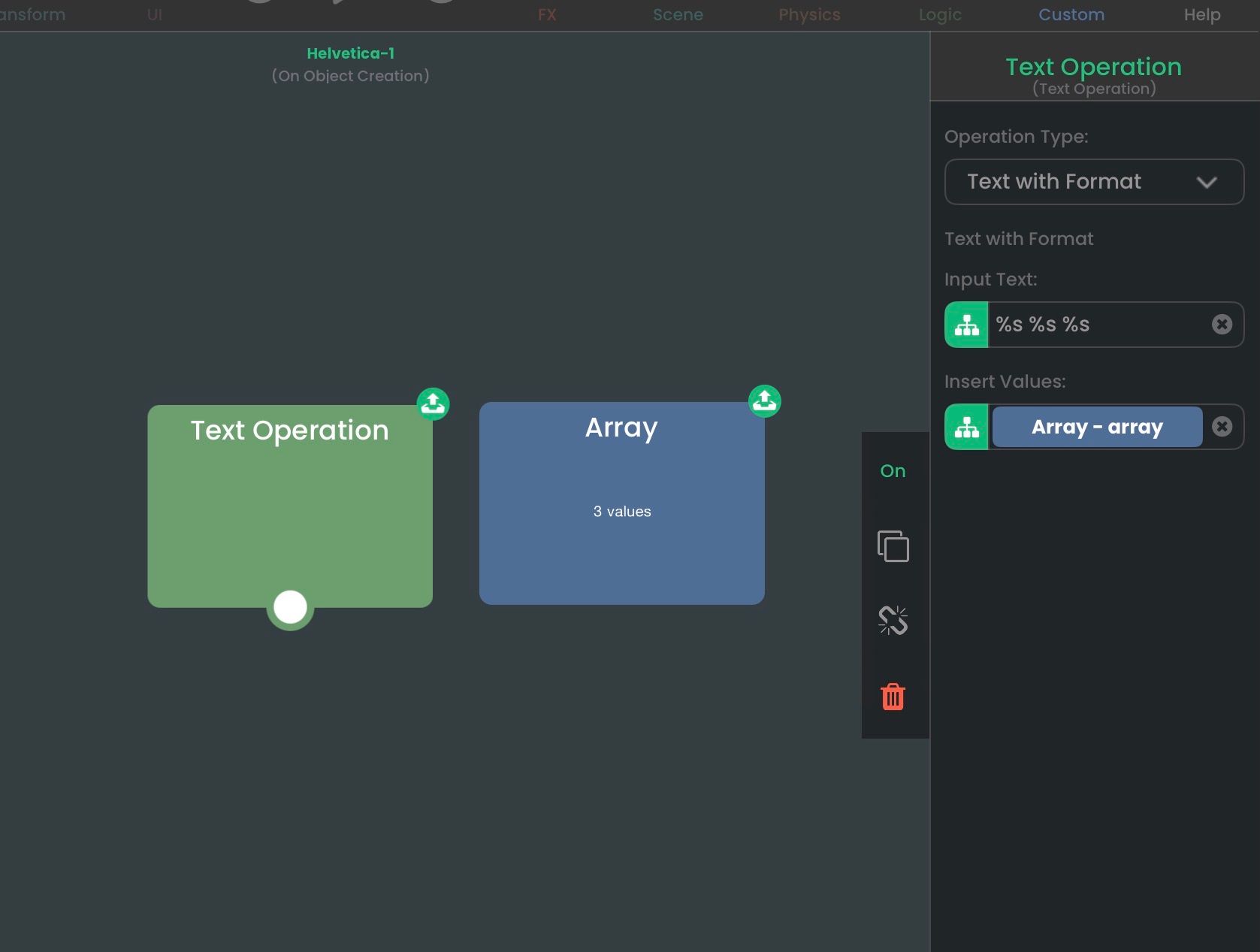
-
From scene to scene hyperPad not loading all behavioursWe are fixing a bunch of scene-related bugs. But there are things you can check now to see if you can fix it.
- Check your Load Scene behaviors - if they have
refreshdisabled, behaviors in your GUI objects and global behaviors don't reset. Try enablingrefreshto see if that fixes your issue. - Right now, the
On Scene Startevent in Frame Event behaviors are pretty buggy and actually trigger in a scene when they are preloaded - this might interfere with boot up logic if you're using this feature. This has been fixed and it will be live in the next update. - Behaviors in UI and mirrored objects don't retrigger unless
refreshis enabled in Load Scene behaviors.
If possible, can you share what logic is failing to run when switching scenes? Any screenshots of your code, explanations and videos will be helpful in fixing this bug.
- Check your Load Scene behaviors - if they have
-
How to shoot in a specific direction.I think you can benefit from using a wall object. You can apply a velocity on it using Set Velocity and it will continue moving forever.
Now to make it move in a specific direction, you do need to use a bit of math. The Set Velocity behavior has
xandyinput fields. What do you plug into those?Calculate
xby using the Sine function. Sine takes in an angle.
Calculateyby using the Cosine function. Cosine takes in an angle.Here I take an angle (substitute it with whatever angle you want) and plug it into Math Function behaviors.
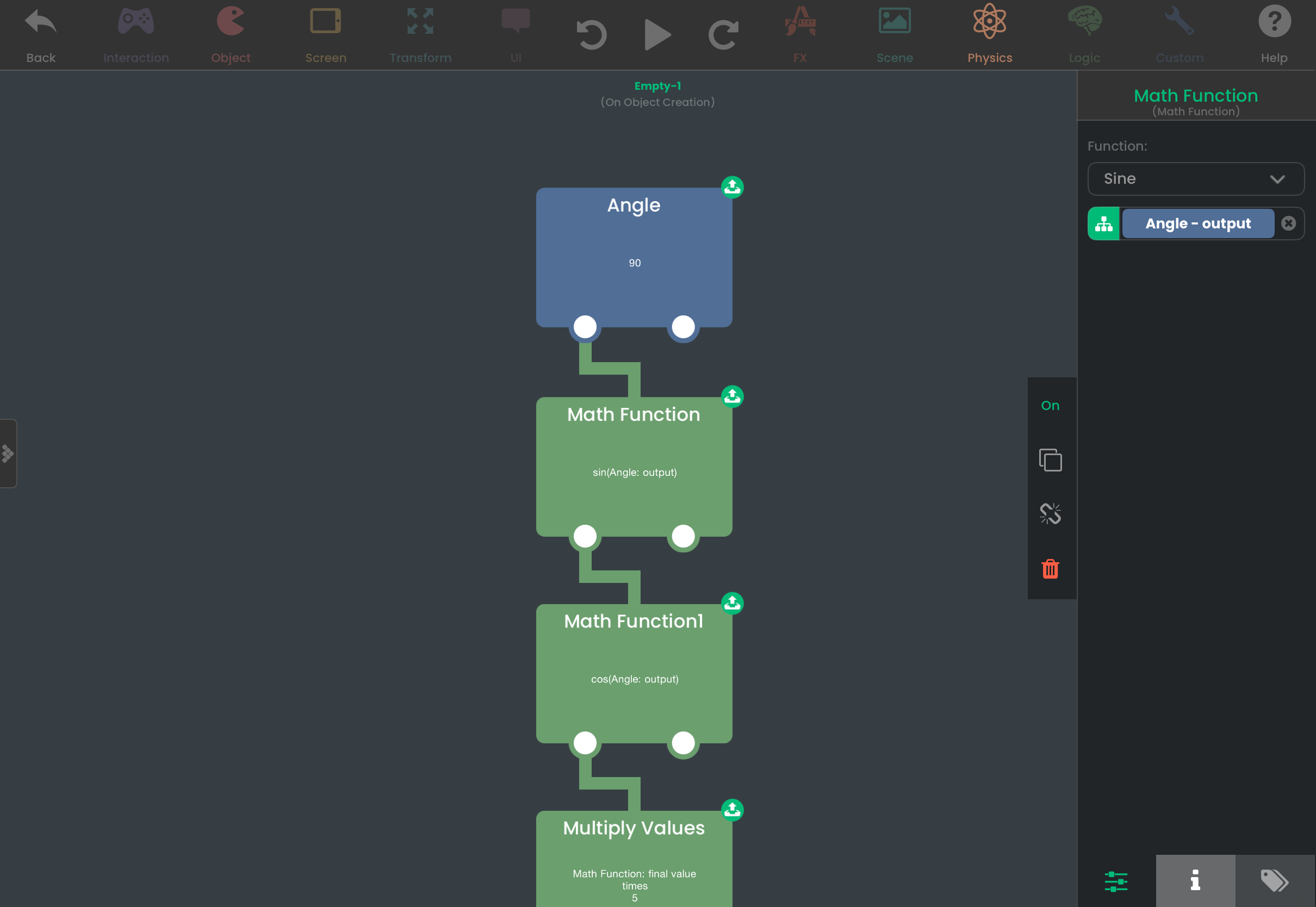
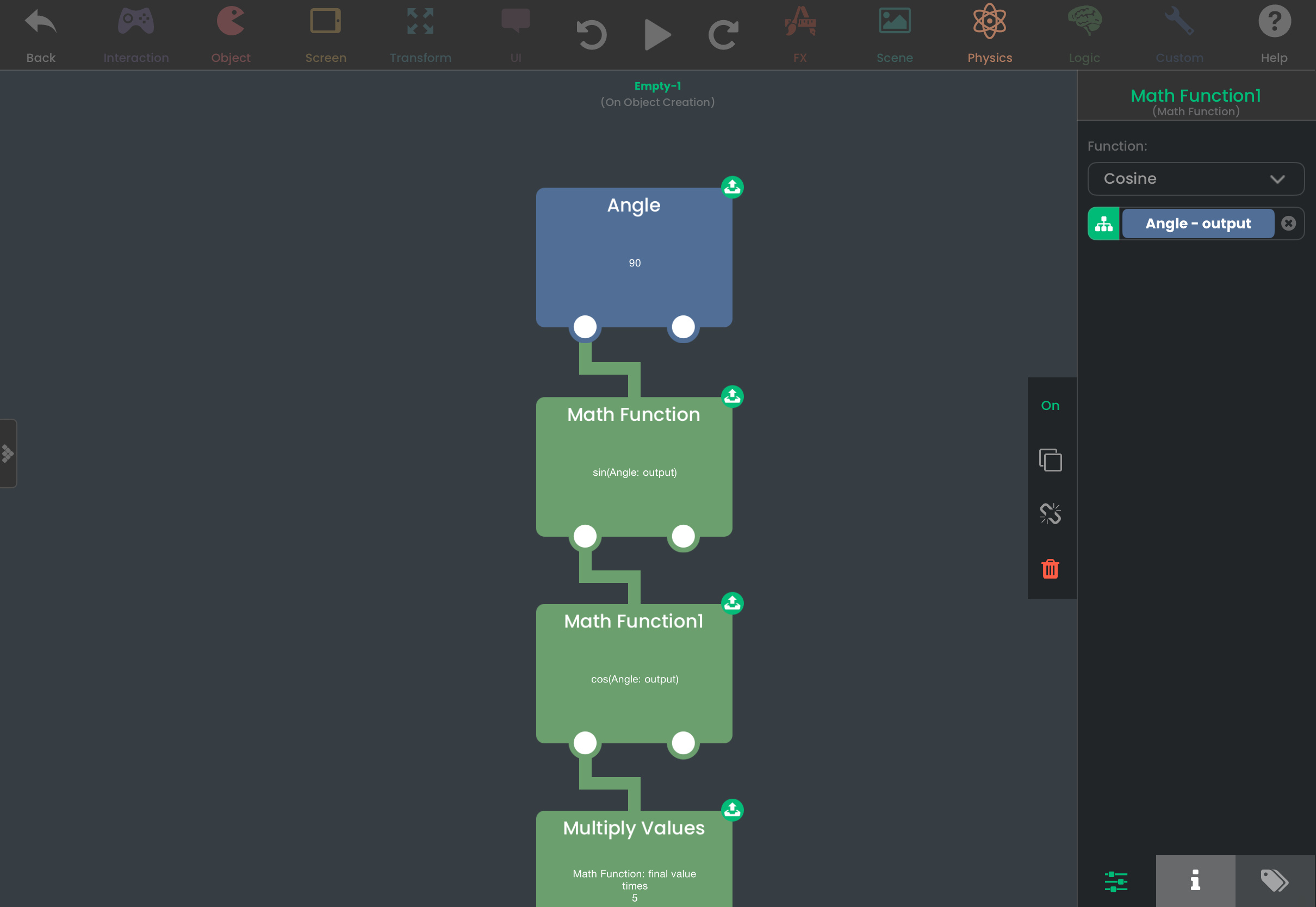
Now I take the outputs of the Math Function behaviors, and multiply them. The bigger the number you multiply with, the faster the object will travel.
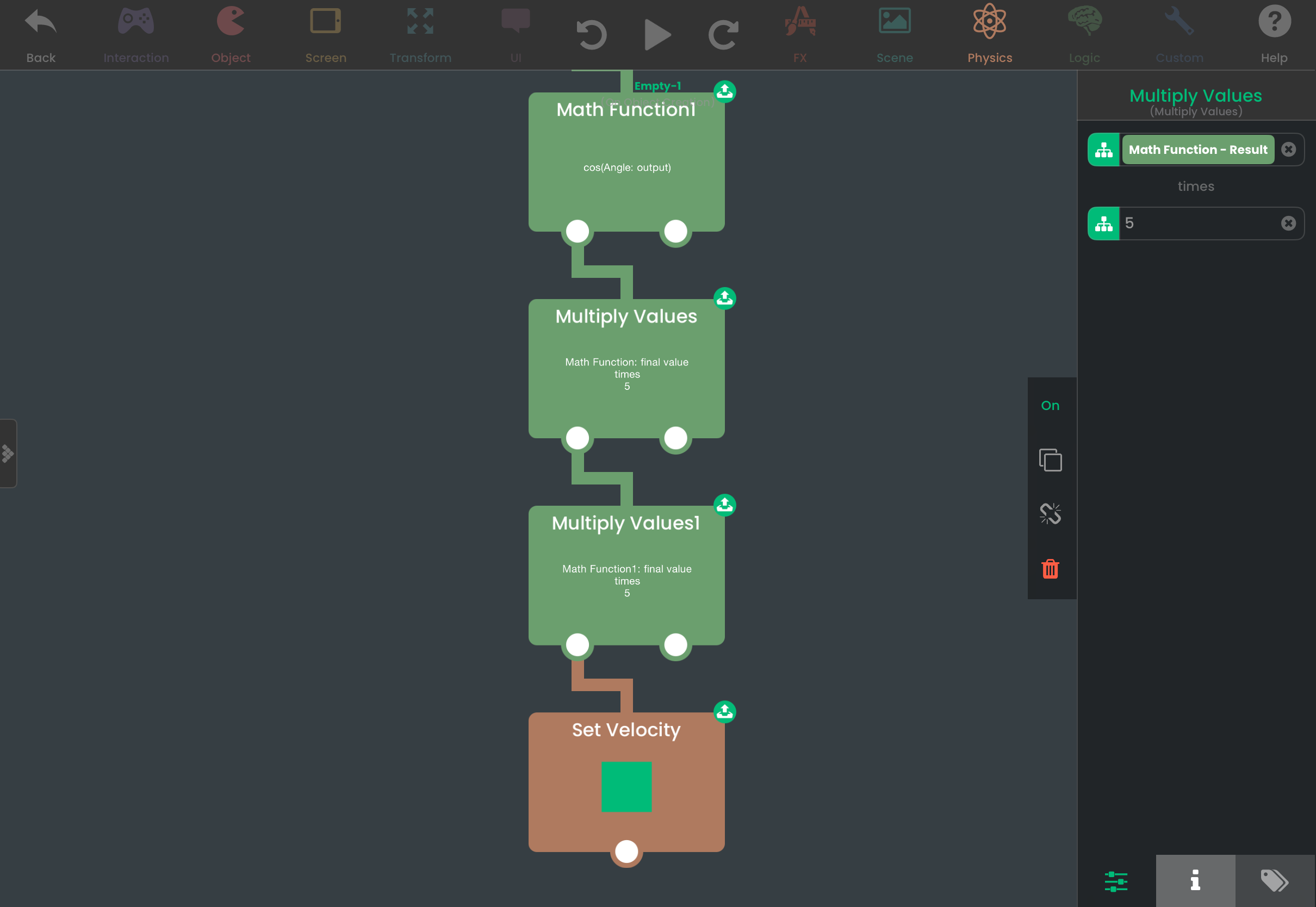
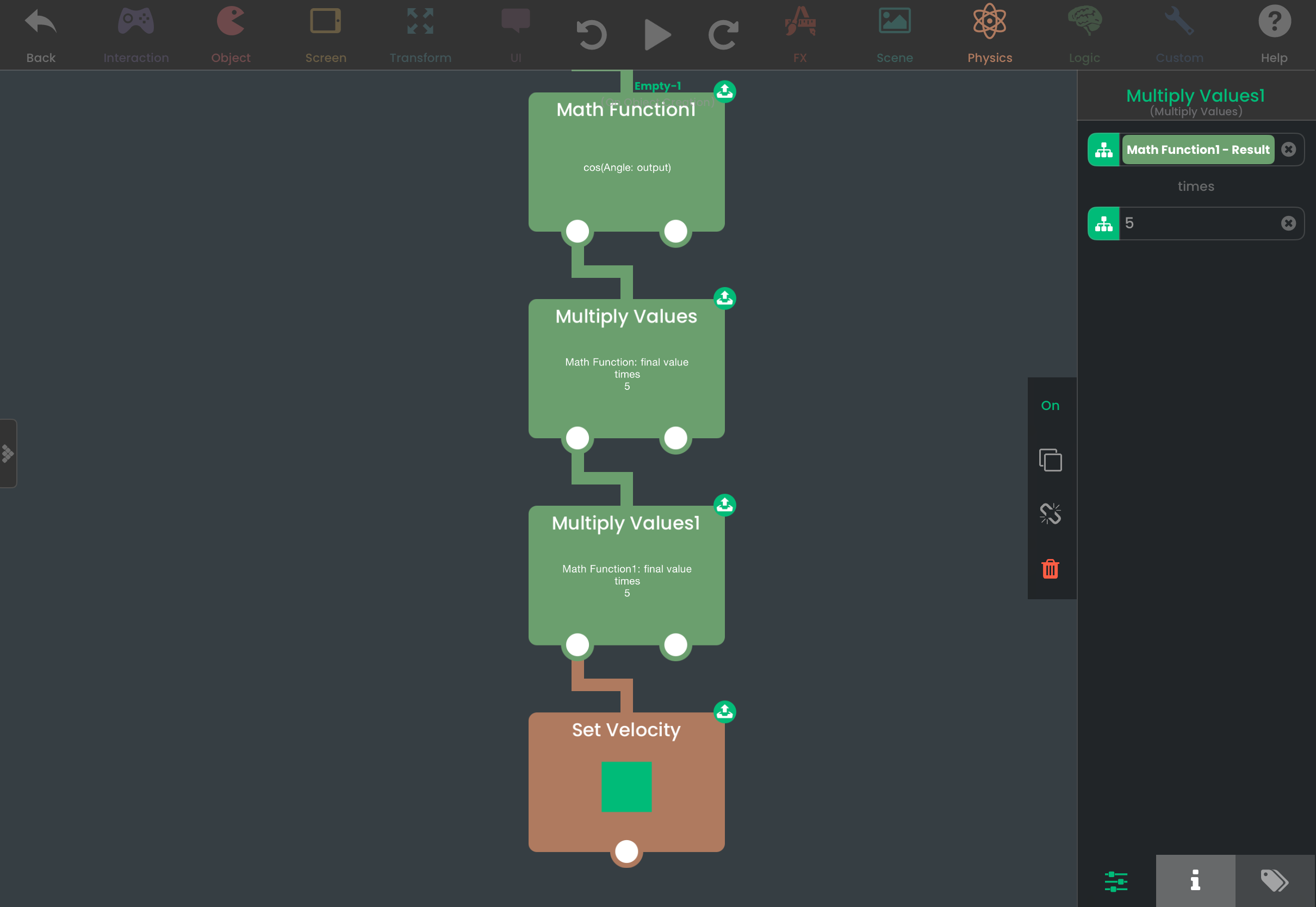
Finally, plug the results of those behaviors into Set Velocity.
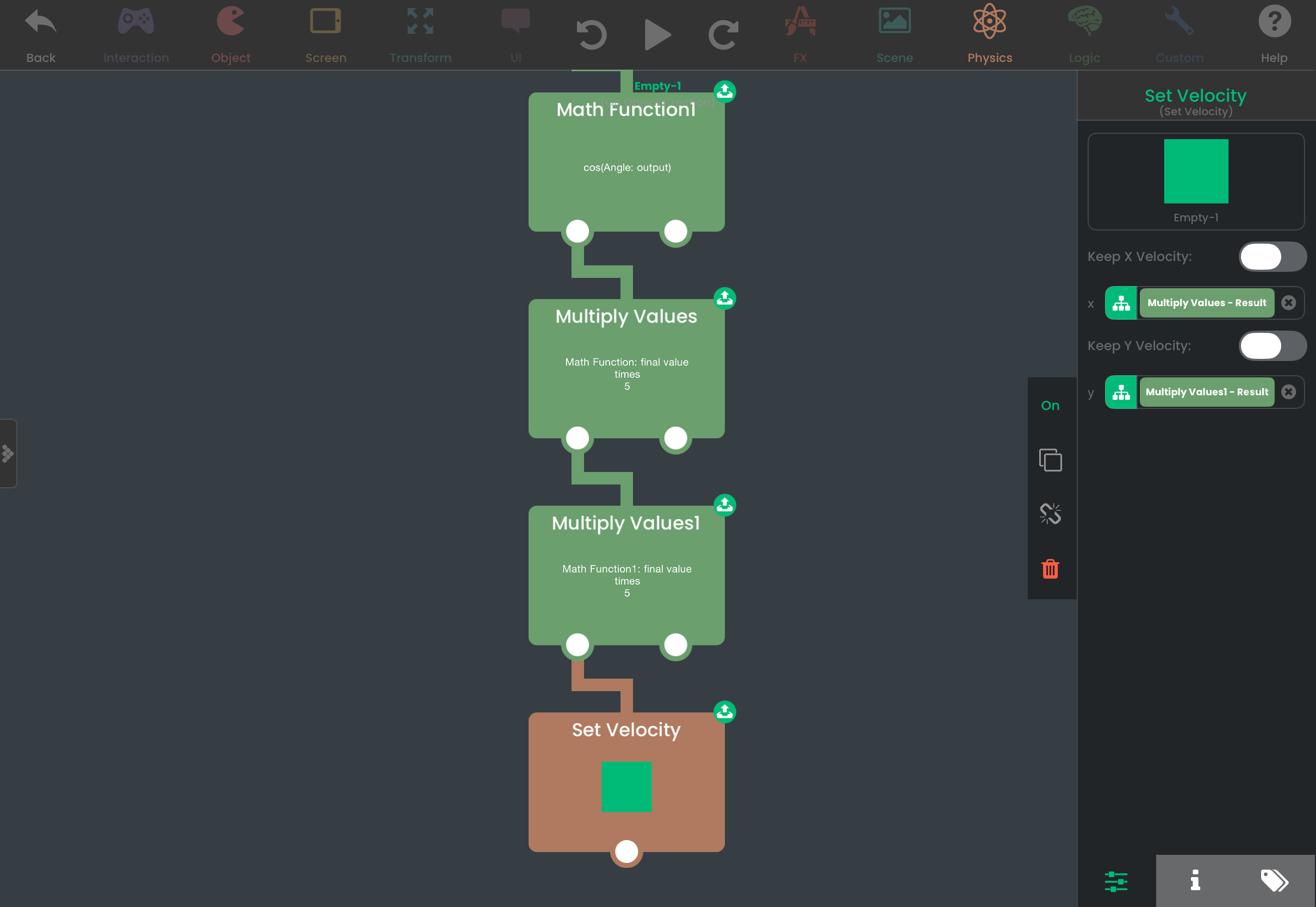
In conclusion, given an
angleandspeedyou want an object to travel, you can calculate thexandyvelocity to apply to a wall object with these equations:x=Sine(angle)*speed
y=Cosine(angle)*speed -
Hit by bullet management tips & tricksHere's an example on how to use the Boolean behaviors.
The Text Operation behavior can also work this way if you wanted to check the prefix of the behavior name instead or something like that.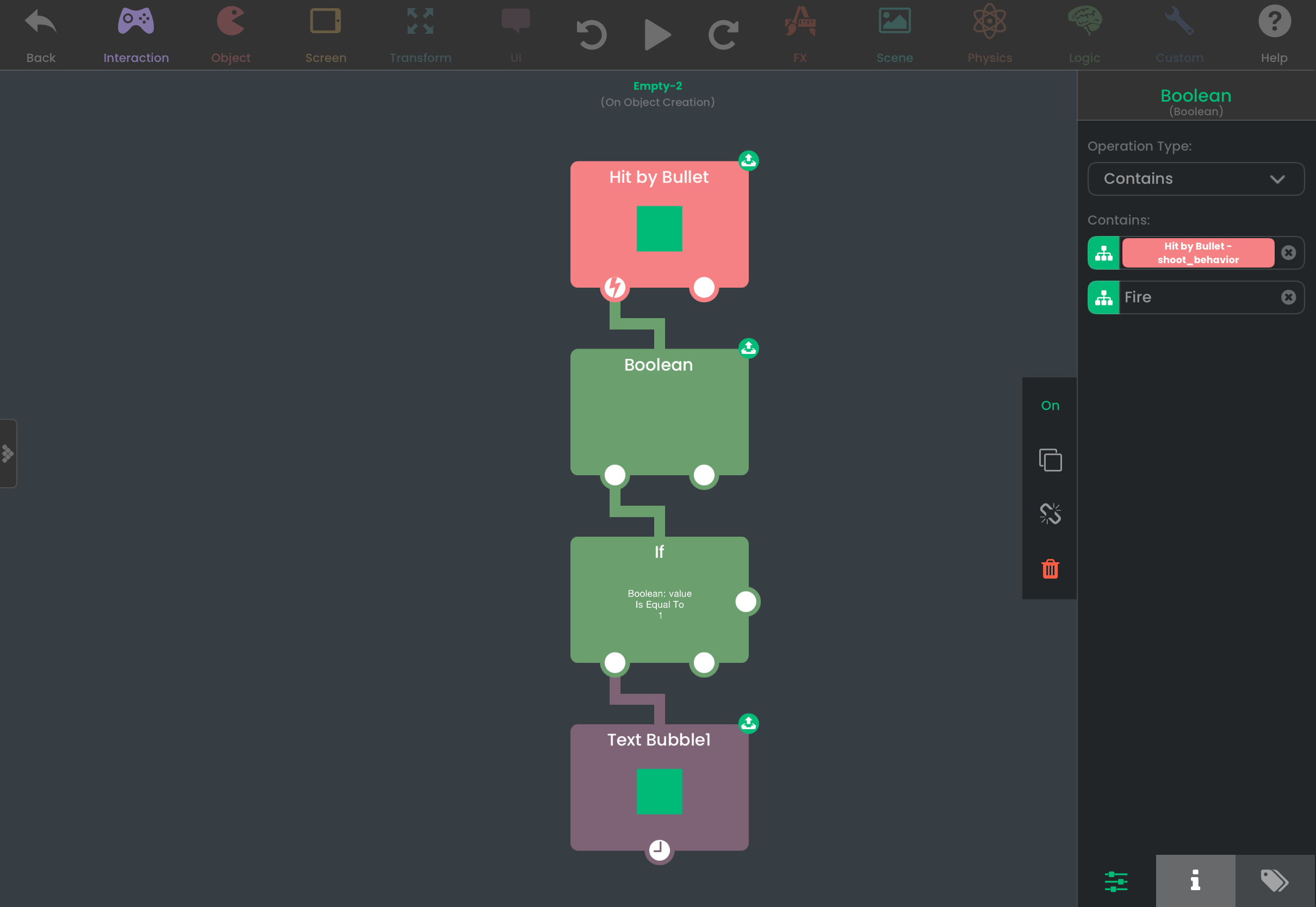
-
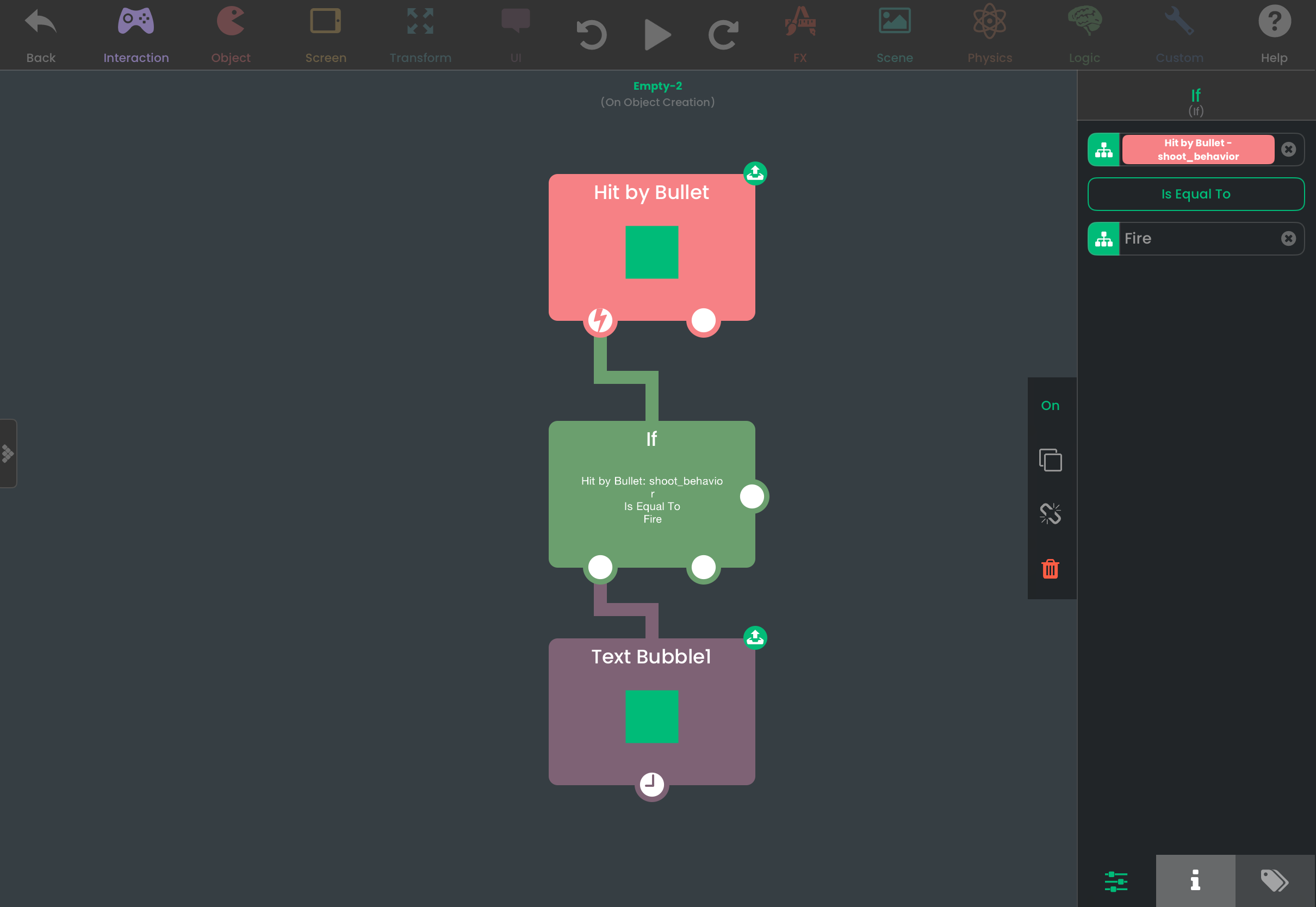
Hit by bullet management tips & tricksIn the Hit by Bullet behavior, you can leave the behavior blank to handle all bullets. The behavior outputs
shoot_behavior, which is the name of the behavior that the bullet comes from. You can check the name of the behavior to see which behavior the bullet came from, and from there you could handle logic differently depending on what type of bullet hit you. You are also givenshooterwhich is the object the bullet originated from. This also works for spawned objects - it will give the same name when the same shoot behavior is used across different spawned objects (in other words, no additional work is needed for spawned enemies).If you named your shoot behaviors appropriately, it will be easy to distinguish between different types of bullets. Even if you have multiple shoot behaviors with similar names, you can use a Boolean behavior to check if the name contains a specific text. So something like
"Fire"and"Fire1"will still work. The Boolean behavior outputs 0 (false) or 1 (true), and you can use an If behavior to only trigger specific logic when the output is 1.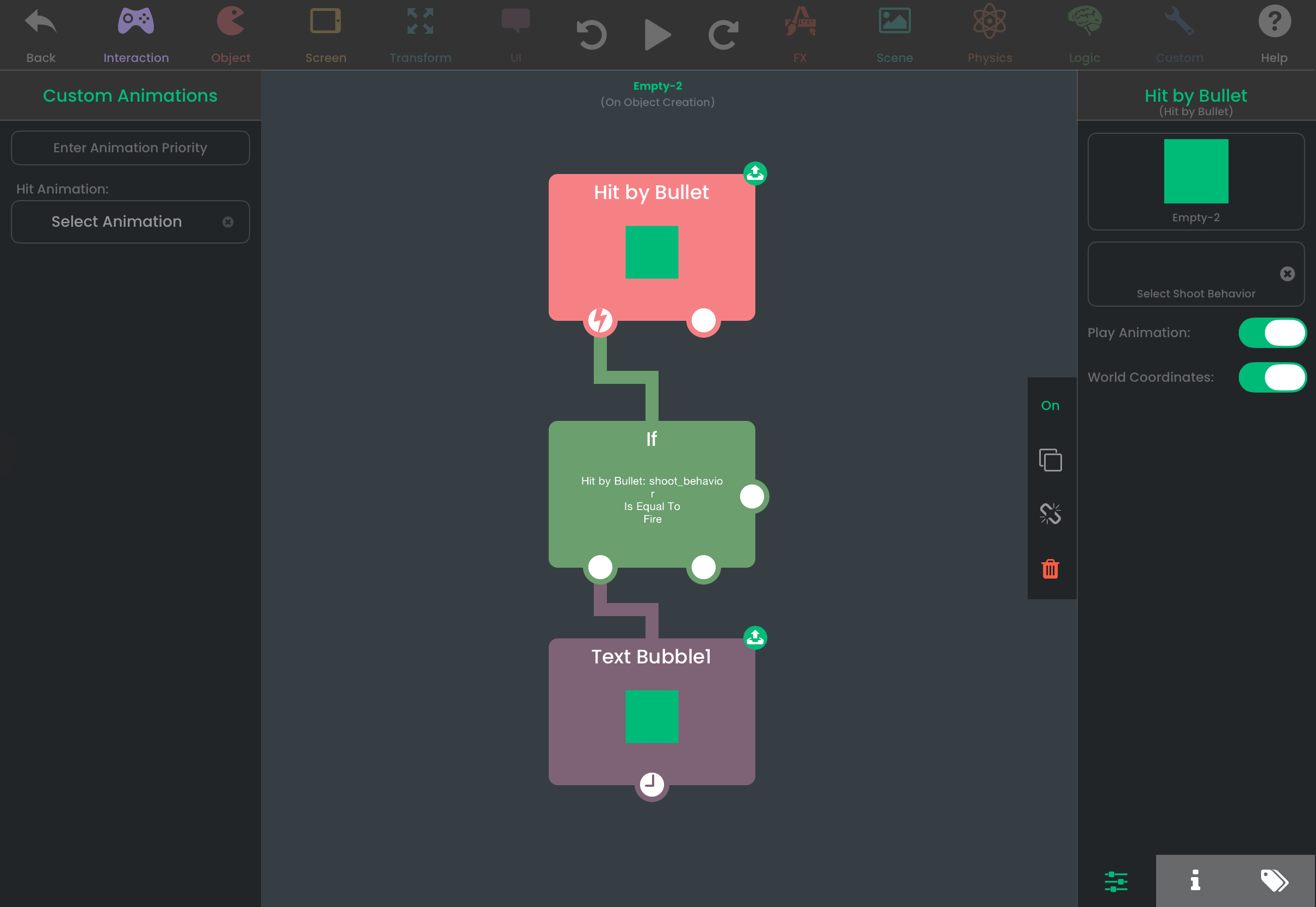
-
Cannot publish projects to the hub currently -
Projectile not showing up on layerI think the hardest part here is getting the
xandyvalues to move the object based on the angle. I guess we can add a shorthand way of doing that at some point. -
Projectile not showing up on layer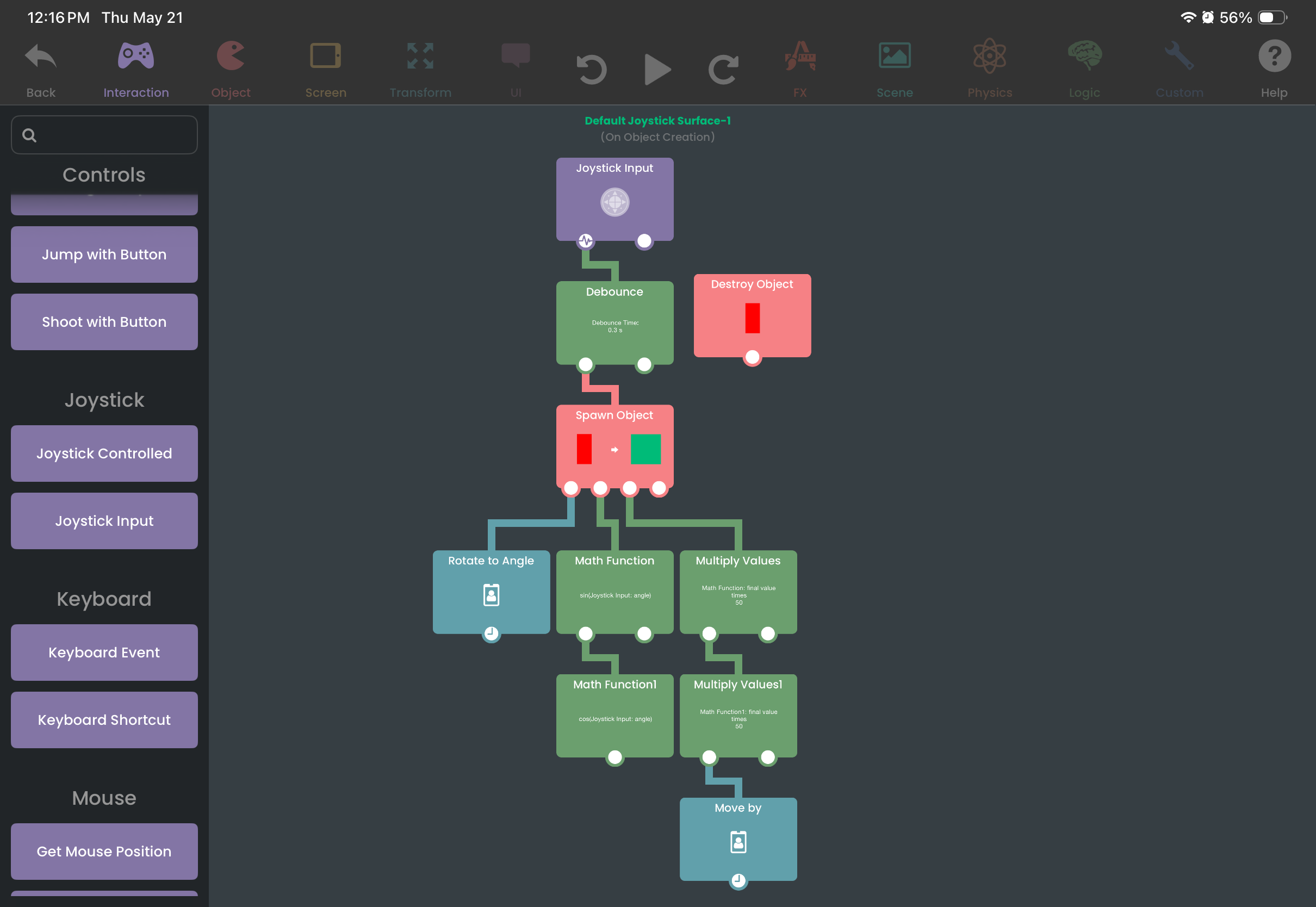
The shooting logic is located in the Joystick object. I'll briefly explain how it works.- Joystick Input triggers while using the joystick.
- Debounce adds a cooldown so it doesn't shoot every frame. It limits how often its child behaviors are executed. In this case, it is set to
0.3sso you can only shoot one bullet every 0.3 seconds. - It spawns an object (the projectile), then it sets the spawned object's rotation to the
anglefrom the Joystick Input. - We perform sine and cosine Math Functions on the
angleto get the horizontal and vertical components respectively. These output a value between-1and1. - These components are multiplied because -1 and 1 is too small of a range. You'd probably want your projectiles to travel further than that.
- Move By moves the spawned object by the multiplied values.
In conclusion, while holding the joystick, the player will shoot a bullet every 0.3 seconds angled at where the joystick is. Depending on the angle, the projectile moves in a particular direction.
In the spawned object, you can add whatever logic you want. In this case, I made the projectiles emit particles and destroy themselves when colliding with an object with the "Wall" tag.
-
Projectile not showing up on layerHere is the project!
https://bit.ly/4x0FdQP -
Projectile not showing up on layerThe update has not released yet, so you won't see this z order setting yet.
I'll quickly whip up a demo project where you can shoot objects (instead of bullets) at whatever angle you please. You can customize the behavior of the objects if you like.
-
Recruiting for best game that you have ever made!Doing good! Nice to see you using this as a way to collaborate with others. Can't wait to see what you guys make! :)
We have a Discord server where you can chat with others if you're looking for quicker response times: https://discord.gg/RpXHJXq
-
How to save an added tag- You need to save and load the array.
- When loading the array, you must reapply the tags.
Let's start with saving and loading.
After modifying the array (it should now contain all the tags you need), you can trigger the Modify Save File behavior and save the entire array. When the scene starts, you can trigger Load from Save File with the same key you used in the modify save file behavior.Now you can load the array, but you must add the tags back, otherwise all the work you did for saving and loading was for nothing. Grab the loaded value from the load from save file behavior, and plug it into the Modify Tag behavior. There is an option to set the tags of the object (or append tags) which takes in an array.
-
Scene changA better approach would be to utilize the screen behaviors to move between images. This allows things to persist instead of the entire scene resetting every time.
-
Projectile not showing up on layer- App hasn't been updated yet.
- The Z order property is editable in the shoot behavior itself.
- I'm guessing you mean to have bullets ignore collisions of some objects - not possible at the moment. Treating bullets like objects would bring a lot of performance overhead. It would be a lot better to use actual objects instead since you can define custom behavior logic for each bullet.